9 Real Estate Software Integrations That Elevate CX

Real estate markets are beginning to regain momentum after several subdued years. Transaction volumes and prices are gradually improving despite persistently high mortgage rates. Yet recovery does not make client acquisition easier.
Buyers and sellers have become more discerning with their choice of an agent, and they’re often swayed by the customer experience (CX) the company offers.
Service quality then depends heavily on how consistently the agent communicates and responds throughout a long decision cycle. Expectations are already visible: 35% of clients said agents could improve their communication, even though 45% identified responsiveness as a positive part of their experience.
Personalization carries just about the same weight. Around 74% of customers expect real estate businesses to tailor their experience, while 69% are willing to pay more when that experience meets a higher standard.
To deliver better service, real estate companies need both timely access to listing data and a complete view of previous client interactions.
Fragmented systems make that difficult. Most real estate teams face challenges with “consolidating data into reports” (37%), “locating relevant data across systems” (21%), and “validating data quality” (21%), which, in turn, undermine CX.
So rather than investing in yet another platform, we recommend companies consider adding more real estate software integrations to systems they already have to create greater fluidity and continuity in service levels.
Table of Contents
9 Real Estate Software Integrations To Implement for Better CX
Connected systems give agents the timely listing data and client context they need to respond with greater accuracy and relevance.
These nine real estate software integrations can help you get more out of the technology you already use.
Lofty
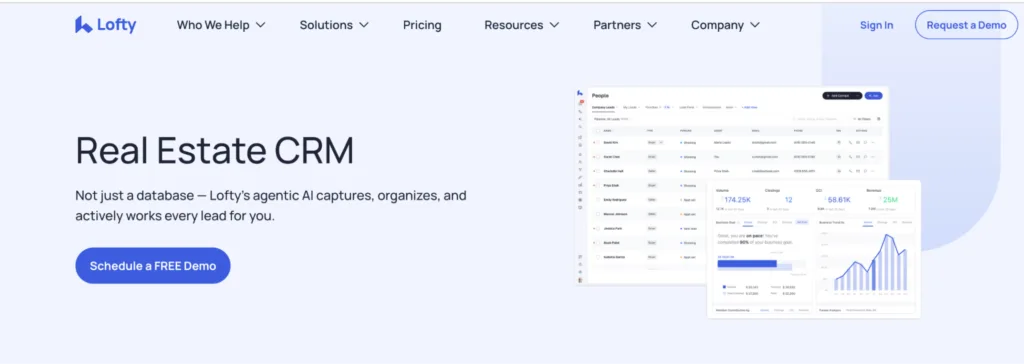
Lofty, formerly Chime, combines a real estate CRM with IDX websites, lead generation, marketing automation, team management features, and agentic AI. So you can manage the entire lead-to-transaction process within one environment and use AI to support online interactions.
The downside? Workflow configuration can be time-consuming, and there’s limited native customization to how you can build prospect pipelines. Lofty also has a limited number of native connectors with third-party tools, which leads to a lot of manual data exports and information asymmetry between teams using different apps.
Edvantis can build an integration layer between Lofty and other software you use, based on an API key or OAuth 2.0 authentication. With it, the necessary data is automatically transferred between the platforms without requiring agents to maintain the same records.
Key problems the integration can solve:
- Duplicate listing entry: New listings are pushed to Lofty automatically within the agreed synchronization interval, with manual sync available when needed.
- Incomplete listing profiles: Custom attributes from internal systems are mapped alongside Lofty’s standard property fields.
- Missing engagement context: Off-platform calls, messages, and notes are consolidated within the relevant listing history.
- Delayed lifecycle updates: Listing changes reach Lofty within the configured synchronization interval.
- Difficult sync recovery: Teams can trigger an on-demand update when a record requires correction or immediate refresh.
Follow Up Boss
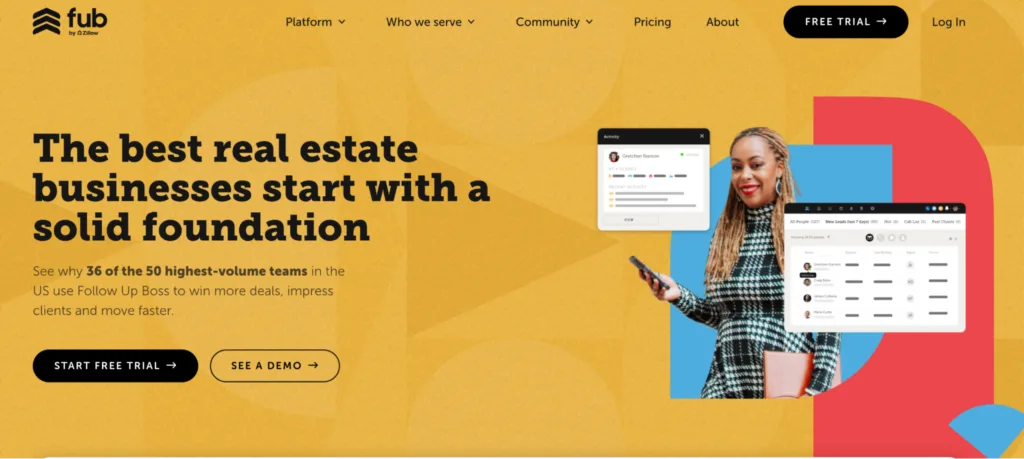
Follow Up Boss is another popular real estate CRM, but with a greater focus on lead management. Out of the box, it allows you to connect over 200 lead sources and provides convenient features for automatically routing inquiries based on custom rules, creating email campaigns, managing appointments, handling calls and chat messages.
But just like with Lofty, data in Follow Up Boss can often become fragmented if the listing platforms or other internal applications you use exchange only part of a lead’s history with the CRM.
Edvantis can help you connect Follow Up Boss to internal systems through its API and webhook. So that all enabling listing data flows into the CRM while lead events generated inside Follow Up Boss return to the source platform. This two-way model gives agents a more complete interaction history and reduces the reconciliation work required across systems.
We recently set up an integration for a US real estate agency to synchronize listings, communications, and lead events. Within the wider platform, the client now processes more than 250 million record updates each month while crawling over 180 websites daily, with no reported impact on read performance.
Key problems the integration can solve:
- Outdated listing statuses: Lifecycle changes are propagated to Follow Up Boss as source data changes.
- One-way activity flows: Webhooks return supported Follow Up Boss events to the source platform.
- Complex contact relationships: Listings remain connected to multiple inquiries and the agents responsible for them.
- Missing CRM events: Notes, appointments, tasks, and deal updates can be reflected across connected systems.
- Reporting discrepancies: A more closely aligned activity timeline reduces differences between operational and CRM reports.
Phone Burner
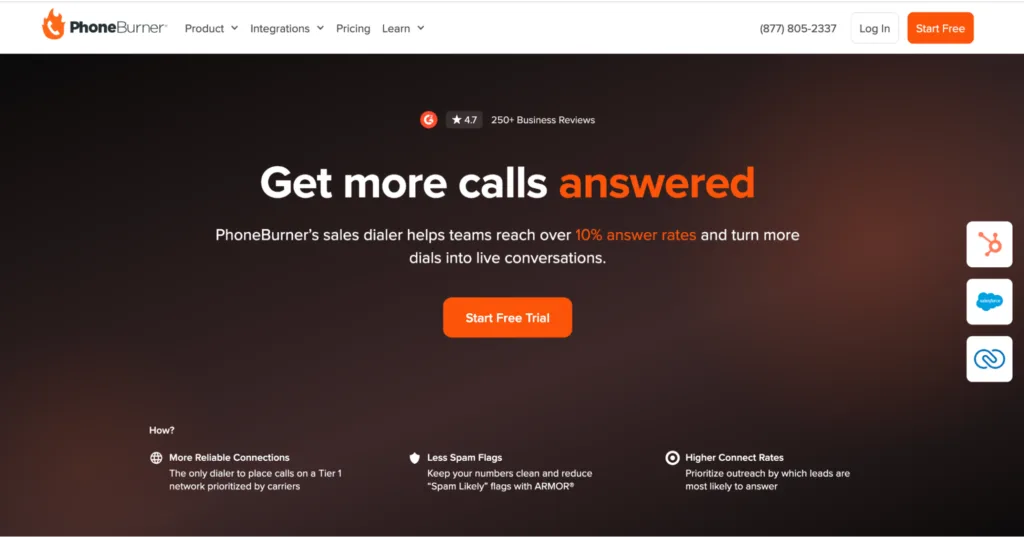
PhoneBurner is a popular cloud-based power dialer for outbound calls. It’s based on a single-line dialing model, which avoids the pause associated with predictive dialers. Beyond calls and voicemail, the platform also enables one-click follow-up workflows based on custom buttons to reduce post-call administrative work.
But unless you’re also using PhoneBurner as your CRM, the workflows aren’t as smooth. You’ll have to rely on CSV imports or manual data entry to sync data with your systems.
Edvantis can address this integration gap by connecting PhoneBurner to your preferred listing or lead management software through its open API. Listings can be synchronized automatically or on demand, while interaction history and status changes move between the systems according to defined mapping rules. OAuth 2.0 provides scoped access, with token refresh handled by the integration layer.
We recently helped one of our clients integrate PhoneBurner into a wider ecosystem of CRM and outreach tools. So that current listing data and status changes get automatically updated in all systems post-call, saving agents heaps of time.
Key problems the integration can solve:
- Repeated data imports: New listings are transferred automatically, with manual synchronization available for selected records.
- Dialing outside the source workflow: Agents can use PhoneBurner against listing data maintained in their preferred CRM or internal platform.
- Limited pre-call context: Lead history and notes accompany the relevant property record.
- Campaigns based on stale conditions: Status changes update the records available for outbound calling.
- Credential maintenance: OAuth 2.0 tokens are stored securely and refreshed by the integration layer.
Mojo Dialer
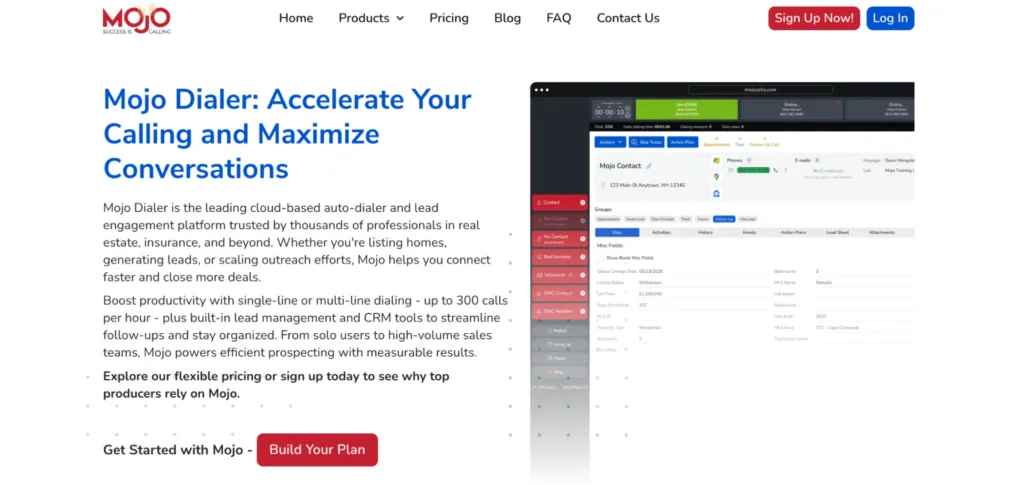
Mojo Dialer is a SaaS prospecting platform that combines single- or multi-line dialing with lead management tools. It’s a popular choice among teams who rely on fast, structured outreach. The Triple Line Dialer can dial up to three numbers simultaneously, while built-in lists and action plans help agents structure follow-up.
But the platform’s speed depends on data quality. Mojo’s native CRM is clunky and somewhat outdated. When property records originate in another system, manual imports add another point of friction and can leave dialing lists out of step with current listing conditions.
Edvantis can integrate Mojo with other source systems in your business through a PIN-authenticated integration. So that listings are transferred in batches of up to 32 records, based on the Mojo API’s processing model while supporting both scheduled and user-triggered synchronization. Status rules can then update prospecting segments as properties move through their lifecycle.
For example, an expired property can enter the appropriate calling list automatically, while a sold listing can be removed before the next campaign. This allows agents to use data curated within their own platform instead of depending exclusively on records sourced through the dialer.
Key problems the integration can solve:
- Inefficient record-by-record transfers: Listings are synchronized in batches of up to 32 items to accommodate Mojo’s API model.
- Static prospecting segments: Expired and FSBO lists adjust as property statuses change.
- Calls concerning sold properties: Inactive listings are removed from applicable dialing campaigns.
- Slow exception handling: Users can trigger an immediate sync when selected records require correction.
BoldTrail
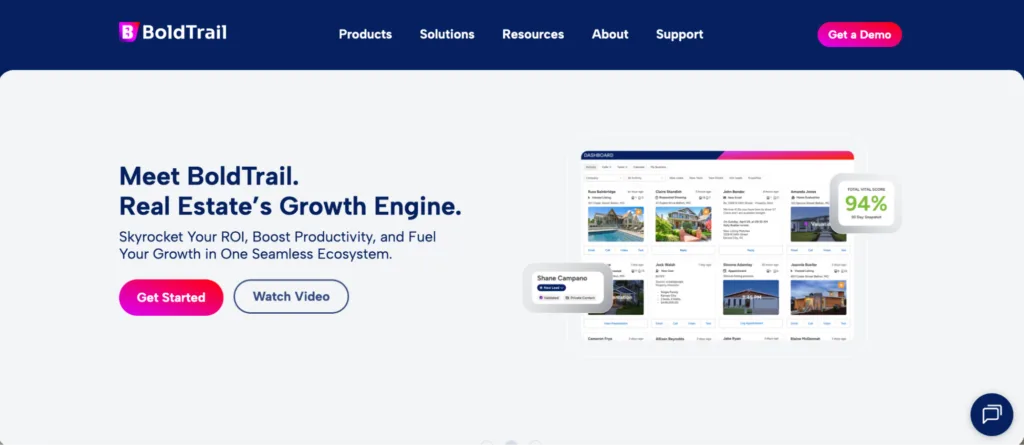
BoldTrail (formerly kvCORE) combines an AI-powered CRM with IDX websites, lead generation, marketing automation, and back-office features. So you can manage client engagement, back-office operations, and even team recruitment within one configurable ecosystem.
Still, if some of your data lives beyond BoldTrail, pushing it inside the platform can be challenging. Edvantis focuses on these data boundaries, where disconnected internal systems can force agents to re-enter listings or work with incomplete client histories inside BoldTrail. Our integration maps listing records, custom metadata, and engagement activity to the corresponding BoldTrail objects through API-key or token-based authentication.
Key problems the integration can solve:
- Missing off-platform engagement: Supported communication activity is attached to the relevant listing.
- Incorrect CRM relationships: Properties are linked to the appropriate contacts during synchronization.
- Campaigns using obsolete statuses: Lifecycle updates keep BoldTrail automations aligned with current listing conditions.
CINC
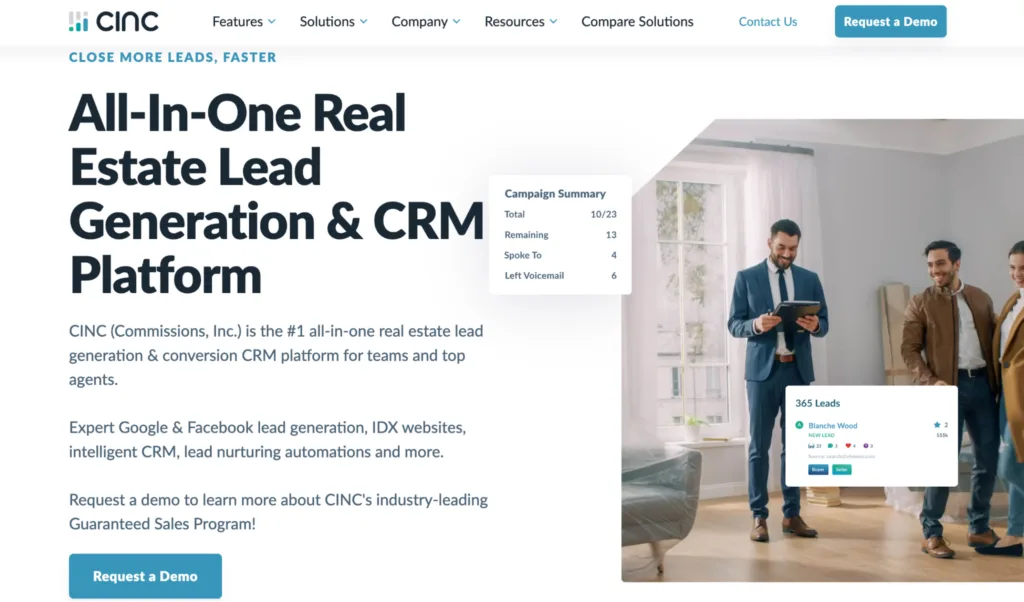
Similar to Lofty and BoldTrail, the CINC (Commissions Inc.) platform combines lead generation with an IDX website, CRM, automated nurturing, and team-management tools. It helps agencies design a pipeline workflow, where prospects seamlessly move from an online property search into routed follow-up workflows without requiring a separate lead-capture platform.
That said, the platform can be cumbersome, with many tasks requiring multiple steps to complete, especially if you need to bring external data. Likewise, some users point to inconsistent lead quality.
While an integration cannot improve the quality of leads generated through paid campaigns, it can give agents better context once a lead enters CINC. Edvantis connects the platform to an organization’s existing listing and data systems, so agents can work with current property details and a more complete engagement history.
For example, we can enable automatic and on-demand listing synchronization, relationship mapping, custom labels, and lifecycle updates. OAuth 2.0 limits access to approved scopes and enables token renewal without requiring users to reconnect the systems manually.
Key problems the integration can solve:
- Lead routing without sufficient property context: External listing data accompanies leads entering the CINC workflow.
- Missing internal classifications: Custom labels preserve the categories used by the source system.
- Incomplete engagement timelines: Supported communication records are connected to the corresponding listing.
- Repeated account reconnection: OAuth 2.0 provides scoped access with automatic token renewal.
HighLevel
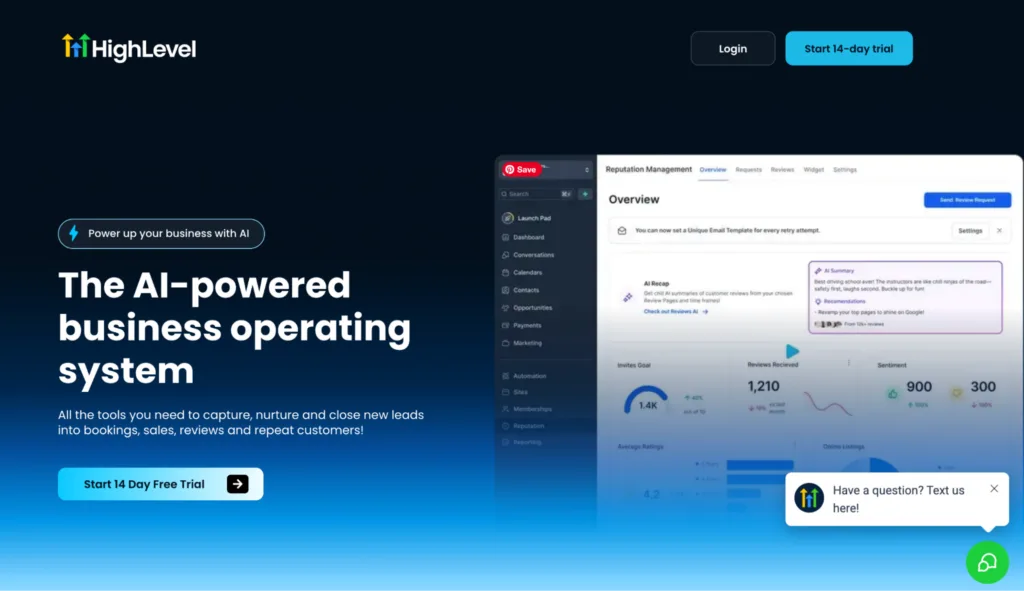
HighLevel is a robust real estate CRM and marketing automation platform with convenient features for managing contacts, pipelines, campaigns, and client communication. Its strongest advantage is communication consolidation: you can coordinate email, SMS, calls, and social messaging from one environment, build custom nurturing funnels, and close deals more effectively with built-in lead scoring, upsell offers, proposals, and payments.
Yet, HighLevel can centralize engagement only when its records remain aligned with the systems where listing data originates. Edvantis builds this connection using HighLevel’s API, which provides endpoints for contacts, messaging, workflows, and webhooks.
With it, all listings are synced automatically or on demand, mapping property details and relevant lead associations into HighLevel. Custom fields preserve business-specific attributes, while external calls, emails, notes, and activity logs can be added to the appropriate record. Lifecycle updates also keep HighLevel pipelines and automations aligned with the current listing status.
Key problems the integration can solve:
- Property data that does not fit standard CRM fields: Custom HighLevel fields preserve business-specific listing attributes.
- Partial omnichannel histories: External interactions are consolidated around the appropriate listing or contact.
- Broken agent and lead associations: Records are connected according to relationships maintained in the source platform.
- Workflows triggered by obsolete conditions: Listing changes keep HighLevel pipelines and automations aligned with current statuses.
- Unsecured API access: Token-based authentication supports restricted access and secure credential handling.
Lone Wolf Relationships
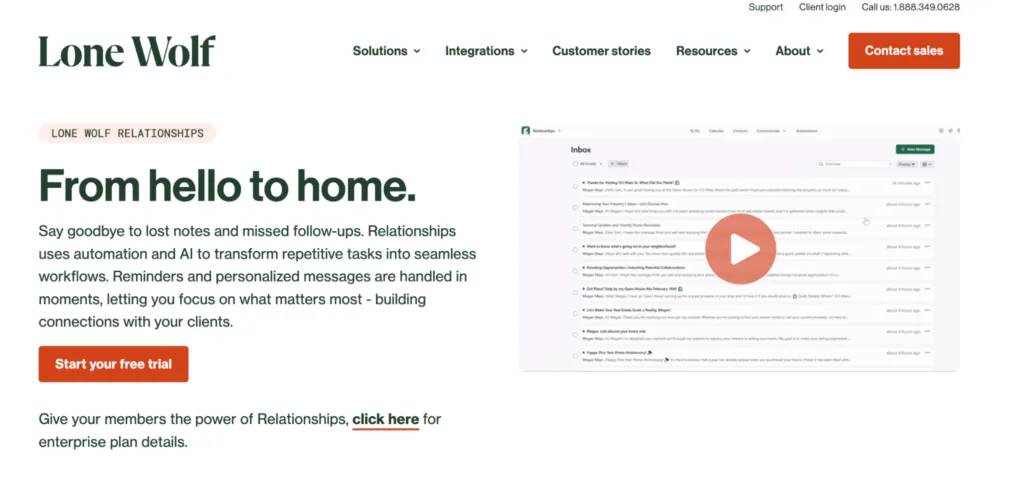
As the name indicates, Lone Wolf Relationships (formerly LionDesk) is a real estate CRM with a stronger focus on managing contacts and client interactions. It combines automated email marketing workflows with AI-assisted email writing, while Google and Outlook synchronization brings email and calendar activity into one workspace. To boot, you get built-in lead tracking by interactions, tasks, and opportunities for better task prioritization.
The downside is that Lone Wolf Relationships doesn’t have a built-in dialer or direct MLS connection, and text messaging requires a separate integration.
Edvantis can connect Lone Wolf Relationships to other communication tools, plus systems where property and lead data originate, subject to the API access and endpoint coverage availability for your account. Lone Wolf supports custom integrations across its ecosystem, but the required objects and write permissions should be validated before implementation.
Once access is confirmed, the integration can map listings to contact or opportunity records and synchronize business-specific fields. Status changes can then update the relevant workflows, while external engagement records provide agents with additional context for follow-up.
Key problems the integration can solve:
- Unclear integration boundaries: An initial API assessment establishes the available endpoints and write permissions.
- Listings disconnected from client records: Property data is mapped to the appropriate contact or opportunity where supported.
- Missing internal attributes: Business-specific fields are transferred within the limits of the Relationships data model.
- Follow-up based on outdated conditions: Supported status changes update the relevant client workflows.
Mailbox Power
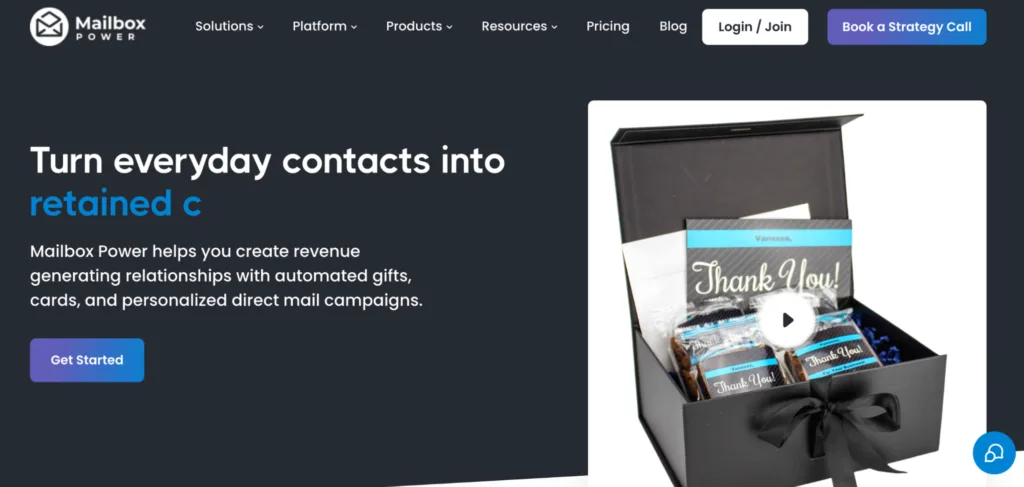
MailboxPower is a direct-mail automation platform for sending personalized postcards, greeting cards, gifts, and other goodies. It combines design and fulfillment with scheduled campaigns. So you can delight prospects and past clients with quick tokens without coordinating each mailing individually.
However, automated mailings depend on accurate addresses and well-maintained recipient groups. When CRM data is stale, campaigns can reach the wrong contact or reflect an outdated property status.
Edvantis can connect Mailbox Power to the system where a real estate company maintains its listings and contacts. The integration synchronizes property records, updates recipient groups as conditions change, and uses listing events to support more precisely timed mailings. API-key authentication provides a direct connection without requiring users to complete an OAuth flow.
For example, a newly listed property can trigger a postcard campaign for nearby homeowners. When a property sells or expires, the relevant contacts can be moved to another group or removed from an active mailing sequence.
Key problems the integration can solve:
- Recipient-group drift: Contacts are added or removed as listing and lead conditions change.
- Delayed property-event outreach: Newly listed properties can trigger the appropriate mailing workflow.
- Incorrect lifecycle campaigns: Sold, expired, and FSBO records move into the relevant audience segments.
- Repeated audience maintenance: Status-driven group updates reduce manual list administration between campaigns.
Better CX Starts With Connected Real Estate Data
Customer experience in real estate is a sum of multiple microinteractions customers have with you at every stage of their journey.
When listing data and contact histories, including relevant status changes, move reliably between systems, agents can respond sooner and personalize communication to each client’s circumstances. That consistency matters throughout a long decision cycle.
The real estate software integrations we described help you build a more continuous CX by addressing the data gaps between different tools. Each one reduces manual maintenance and gives customer-facing teams a more current view of listings and conversations. With the right mapping and synchronization rules, consistent service becomes easier to maintain as lead volumes grow.
Edvantis develops REST APIs and data pipelines that connect real estate platforms with third-party applications. If fragmented data is limiting your ability to deliver timely, relevant client experiences, contact us and we’ll suggest the optimal solution.